
Hornby ABERCORN-BUNDLE Set of 7 BR TT:120 'Duchess of Abercorn' Steam Locomotive & Coaches


Product Details
| SKU | HOR-ABERCORN-BUNDLE |
|---|---|
| Vendor | Hornby |
| Categories | Bargains Best selling products Bundle Pack Era 5 Hornby Hornby Summer Sale Locomotives New products Other Other Hobby Steam Locomotives TT:120 Scale |
| Scale | TT:120 Gauge |
| Share | |
| Features |
|
Product Description
Consists of:
1X TT3012M BR (Late) Princess Coronation 4-6-2 46234 'Duchess of Abercorn' Steam Locomotive
1X TT4032 LMS Period III 57' Corridor First Coach BR Maroon M1040M
1X TT4033 LMS Period III 57' Corridor Third Coach BR Maroon M1883M
1X TT4033A LMS Period III 57' Corridor Third Coach BR Maroon M1832M
1X TT4034 LMS Period III 57' Brake Third Coach BR Maroon M5629M
1X TT4034A LMS Period III 57' Brake Third Coach BR Maroon M5842M
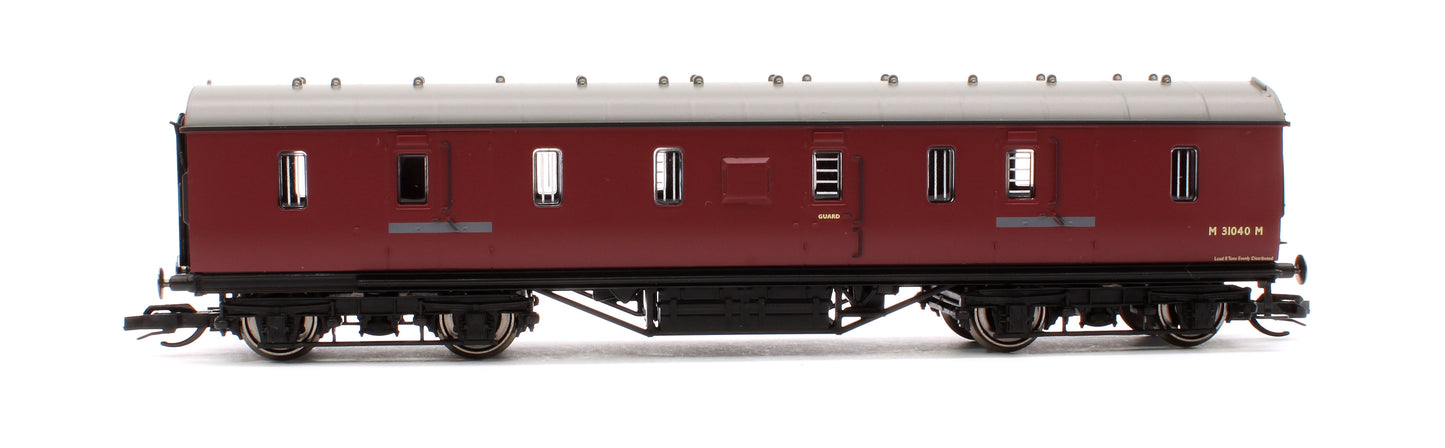
1X TT4035 LMS Period III 50' Full Brake Coach BR Maroon M31040M
'Duchess of Abercorn' Steam Locomotive
The story of the Princess Coronation Class is one of split personalities and purposes. The original streamlined form of the class arose from tests on Stanier's development of the Princess Royal class locomotives. When the opportunity to produce five conventional versions of the Coronation Pacific as a comparison to the streamlined version arose, Stanier was quoted as saying, 'They can have their streamliners if they b***** want them, but we will also build them five proper ones' such was his lack of interest in a streamlined locomotive specifically.
Those first five conventional locomotives were 6230 Duchess of Buccleuch to 6234 Duchess of Abercorn, colloquially known as Duchesses, after the first of this sub-class. Appearing in 1938 with a single chimney and without smoke deflectors, many purists regard these as the finest Pacific locomotives ever produced. The next four Duchesses to appear were 6249-6252 in 1944 and they emerged from works with a double chimney.Originally ordered as streamlined, the demands of maintaining the streamlined form exceeded the cost savings in coal and so they emerged from works without the casing, but with streamlined tenders (which had been completed before that decision was taken). In 1946 the next three Duchesses, 6253-6255, differed in appearance again, this time the curved fall plate at the front was replaced by a split platform and smoke deflectors were fitted.
The process of de-streamlining the remaining engines began with 6235 City of Birmingham in April 1946, with 6243 City of Lancaster being the last in May 1949. Locomotives that had streamlining removed had a distinctive slant to the leading edge of the top of the smokebox, where this was previously hidden by the panels and designed to accommodate them. Eventually the raked smokeboxes were replaced with conventional smokeboxes, so that by late 1958 the majority of the fleet showed a similar appearance for the first time.
Duchess of Abercorn entered LMS service in 1938 in the LMS Crimson Lake livery. Before nationalisation however the locomotive is said to have been painted into a solid blue-grey colour, the only such example to allegedly receive this paint job however no photos confirm this. Duchess of Abercorn would then go on to be painted in two different liveries under BR and be renumbered from 6234 to 46234. The locomotive would be scrapped at Crewe in June of 1963.
BR Maroon Coaches
At the start of the 1930s the LMS abandoned the ‘Small Engine Policy that it had inherited from one of its largest predecessors, the Midland Railway. The abandoning of this policy led to some of the most famous Stanier and LMS designs such as the Jubilee, Black 5 and Duchess classes. To accompany this shift in ethos, new coaches were constructed for the LMS, with the 57’ coaches being built between 1931 and 1932.
These new coaches were steel clad, the first such for the LMS and had seating for 56, 300 such examples were built. In LMS service these coaches were painted in their striking maroon livery with LMS insignia adorning the side. The coaches, being relatively new at the time of nationalisation lasted well into the swansong days of BR, appearing in both its carmine and cream livery and later BR Maroon when BR decided to shift aesthetics back to regional recognition.