
Rapido Trains UK 985009 WD 35T Rectank No.17329 GWR Grey 1940s (Girder Load on Bolsters)


- Pre-Order


Product Details
| SKU | RAP-985009 |
|---|---|
| Vendor | Rapido Trains UK |
| Categories | Best selling products Era 3 HO-OO New products OO Gauge Rolling Stock OO Gauge scale OO Gauge Wagons & Freight Pre-Orders Rapido OO Gauge WD 35T Rectank Bogie Wagon Rapido Trains UK Rolling Stock Wagons & Freight |
| Scale | OO Gauge |
| Share | |
| Features |
|
Product Description
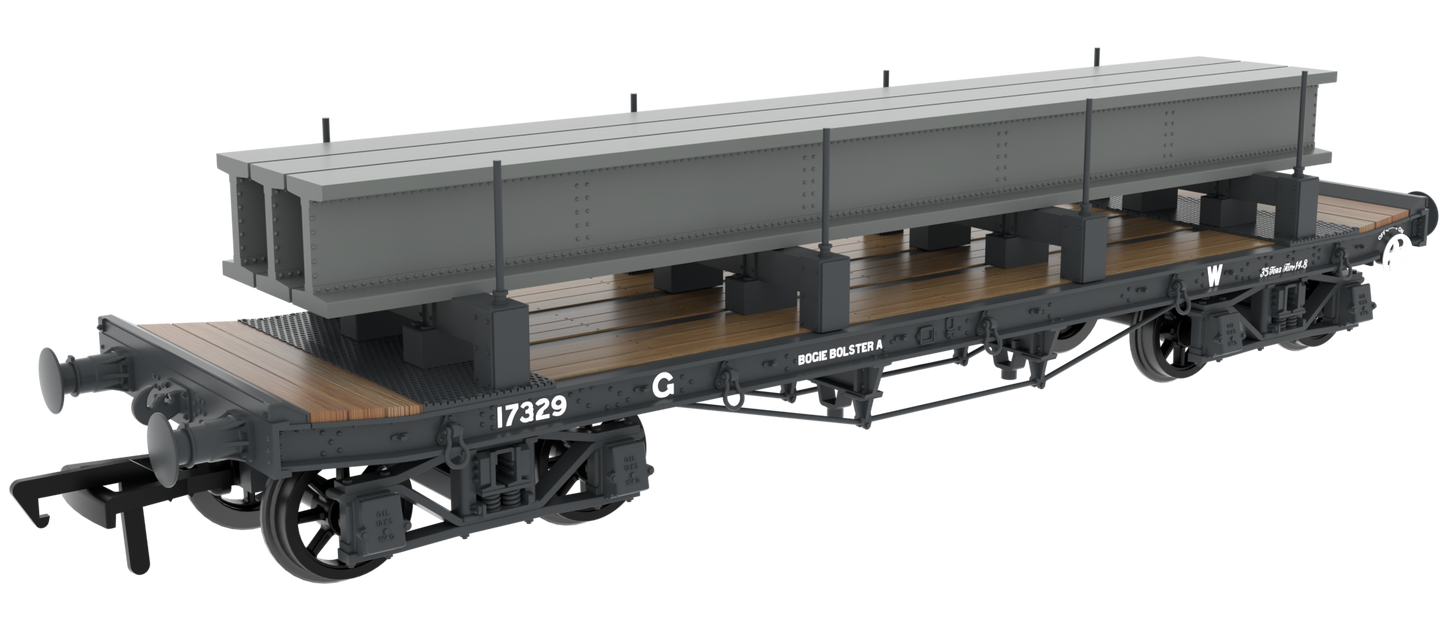
WD 35T Rectank No.17329 GWR Grey 1940s (Girder Load on Bolsters)
- Girder Load on Bolsters
- Jacks removed
- Chain Boxes removed
- 4 Bolsters
- Spoke wheels running in pinpoint bearings
- High level of detail above and below the floor line
- High quality livery application
- NEM coupler pockets
- 1:76 scale, (OO gauge)
In 1916, the British Army introduced the world to their latest development in military technology. Kept secret by designating them as a type of all-terrain water carrier, they were dubbed the ‘Tank’ by those in the factory. This nickname would later be adopted as their formal title and was listed as ‘Water tanks for Mesopotamia’.
By 1918, the tank was being used regularly across the Great War battlefields. Due to their destruction at the hands of the enemy and mechanical failures, a steady stream of replenishment of this new and terrifying war machine was required.
Efficient transport of the tank was vital for the war effort, so the War Department ordered purpose-built wagons to aid in their transfer from the factory to the frontline. These new 35-ton bogie machinery trolleys were better known as the Rectank. Its name came from an abbreviation of the Railway Executive Committee Tank Wagon.
The War Department ordered two hundred Rectank wagons. The majority are believed to have been built by the Midland Railway at Derby. However, forty were made by the GWR in Swindon, and a surviving preserved example was built by the Lancashire and Yorkshire Railway. So, the exact number of who built what and where remains somewhat of a mystery.
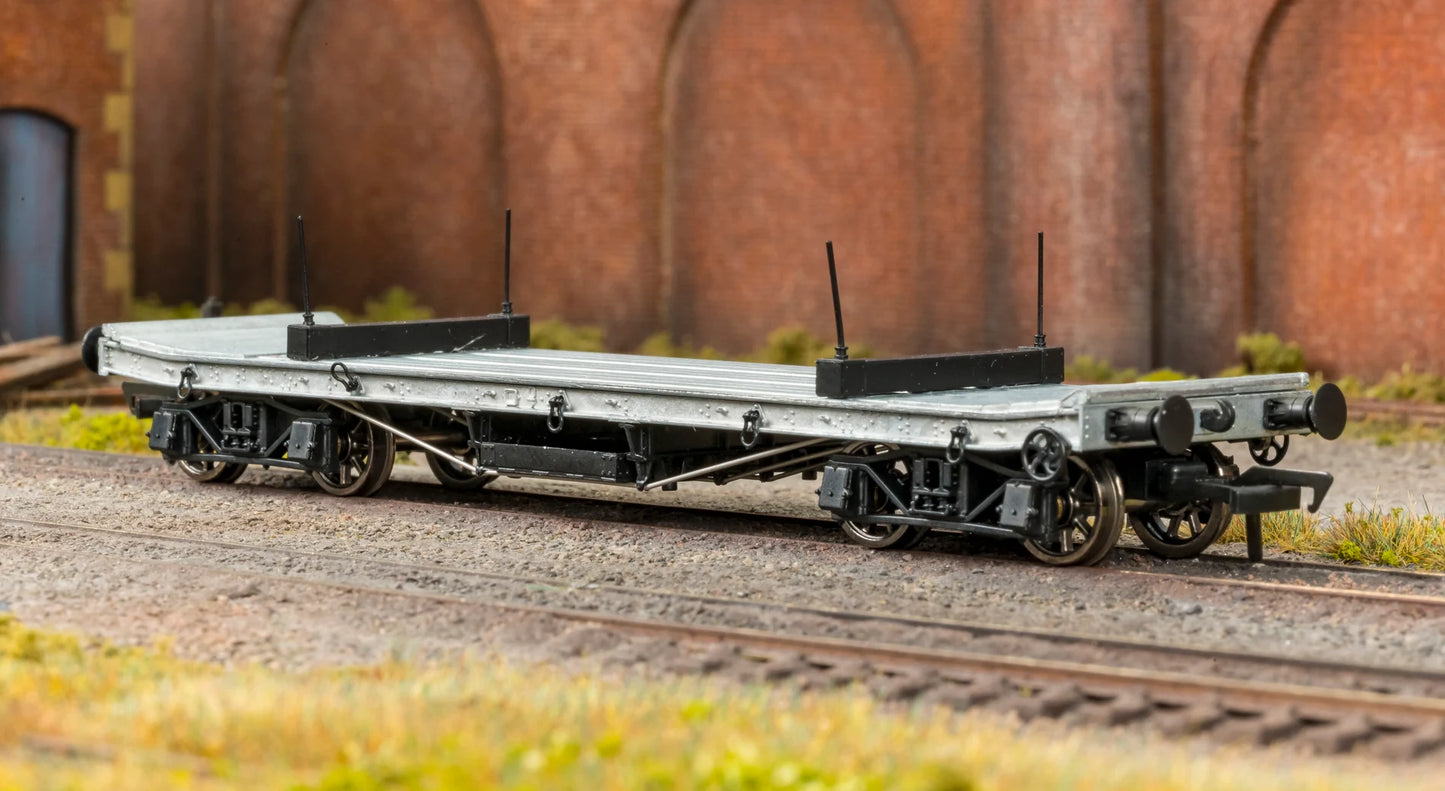
The Rectank is thirty-four feet in length over headstocks and features Midland-designed diamond-framed bogies. In addition to a strengthened wagon bed, screw jacks were fitted with two stirrups to each buffer beam and behind the outer queen posts. This was to brace the wagon against the track while the tanks were driven aboard.
Two boxes were fitted under the wagon bed; these were for storing the load securing chains safely when they were not in use.
Tanks were loaded by driving them in from the side and then turning them while on the wagon, which was a very precise, delicate manoeuvre indeed. They were then chained down to prevent them from moving. As British tanks were designated as landships at this time, they were tended to by members of the Royal Navy.
With most tanks being built in Lincoln, the Rectanks would have traversed a variety of pre-grouping lines, bound for the Port at Richborough, near Dover. They were then loaded onto purpose-built roll-on / roll-off ferries and transferred to France. Rectanks were also used to transport other heavy vehicles and equipment, so would have travelled from the relevant factories to ports such as Portsmouth or Southampton.
With the conclusion of WW1, the Rectank was purchased by, and returned to service under the ownership of numerous pre-grouping companies. This included the LNWR, Midland, GWR, and NER. This is where they remained until the grouping of the railways in 1923.
Moving to GWR, LMS and LNER ownership, these incredibly effective flat-bed wagons carried a multitude of heavy or long loads. Bolsters were fitted to some to diversify their carrying capability further.
During World War 2 the Rectank returned to its original purpose, transporting tanks and equipment. Many were carried across to France to deliver supplies, which resulted in some being lost in action.
Upon the Nationalisation of the railways, several surviving examples were inherited by British Railways. Other than a handful that were used for departmental and industrial purposes, and a number that had previously gone to the Longmoor Military Railway, the remaining Rectanks were withdrawn between 1959 and 1962. The departmental variants soldiered on until the late 1960s.
BR would build a further 78 Rectanks in 1959-60. These featured a fresh style of bogie and truss frame from the original design.
Thankfully, quite a few Rectanks were preserved. Dotted across the country, these inconspicuous wagons are an important historic link to the Great War and the vital role they played over one hundred years ago."""